
Introduction
“The correct way in which to cultivate Clivia plants or seeds depends on whom you ask!”
Everyone has their own preferred way in which to successfully cultivate their Clivia.
The Clivia plant is indigenous to both South Africa and Swaziland.
At this stage there are six species of Clivia. Of the six species, one of them, Clivia miniata, has upright flowers. The other five species have pendulous flowers. The pendulous species are C. caulescens, C. gardenii, C. robusta, C. nobilis and mirabilis. All of the species are endangered owing to habitat clearance, theft and usage in traditional medicine. C. mirabilis. the most recently discovered Clivia found in area of Niewoudtville, is critically endangered. Not many plants were ever present and the climate – semi desert- is totally different from the requirements of the other species.
Increasing the number of plants in your collection.
a) The most obvious way is the purchase more plants.
b) When your mother plant has offsets and these offsets have grown to a suitable size, separate them from their mother plant and plant them in a different area or pot.
c) Seed propagation.
This is the quickest way in which to increase the number of plants you have. I will use the C. miniata species as an example. C. miniata usually bloom in Spring.
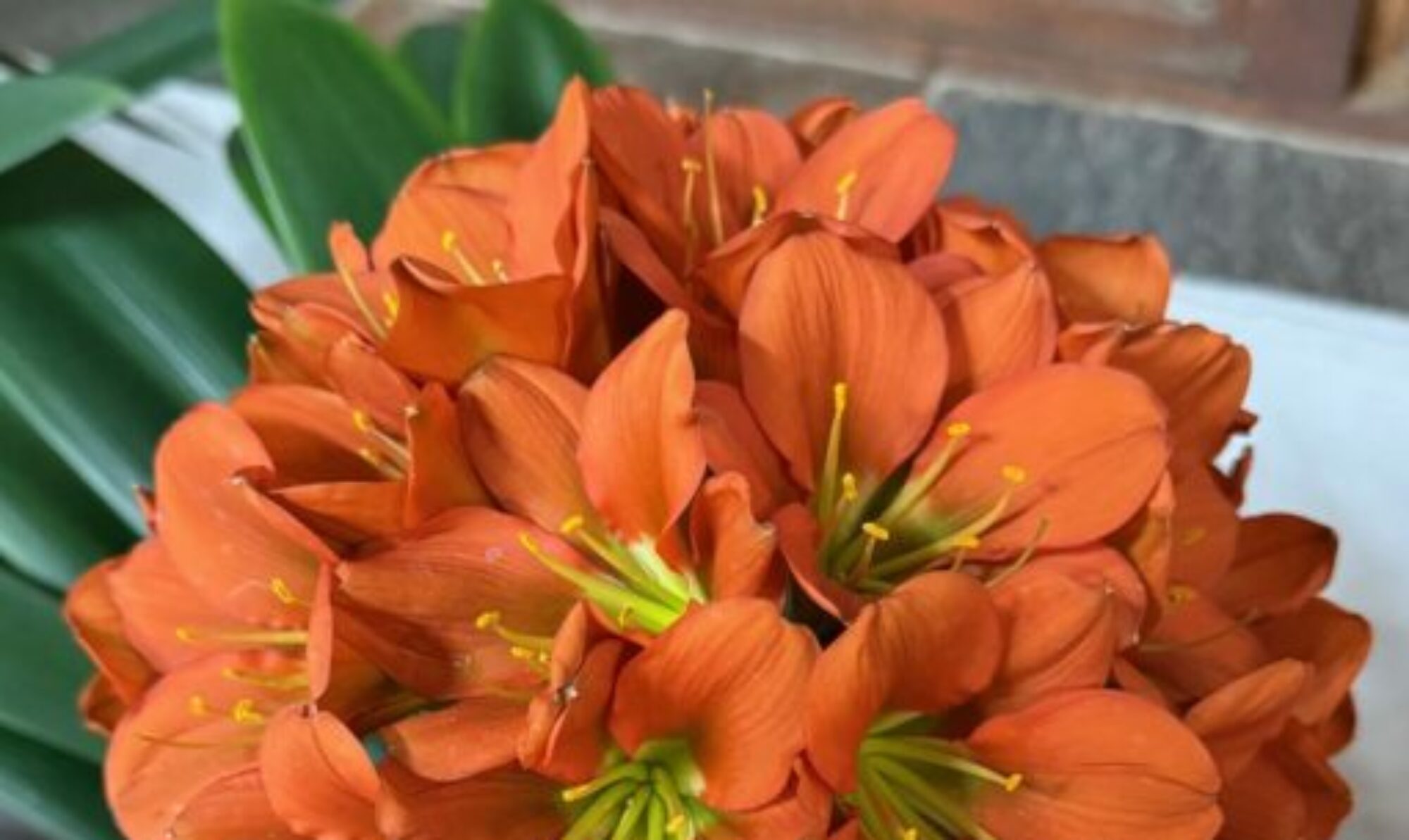
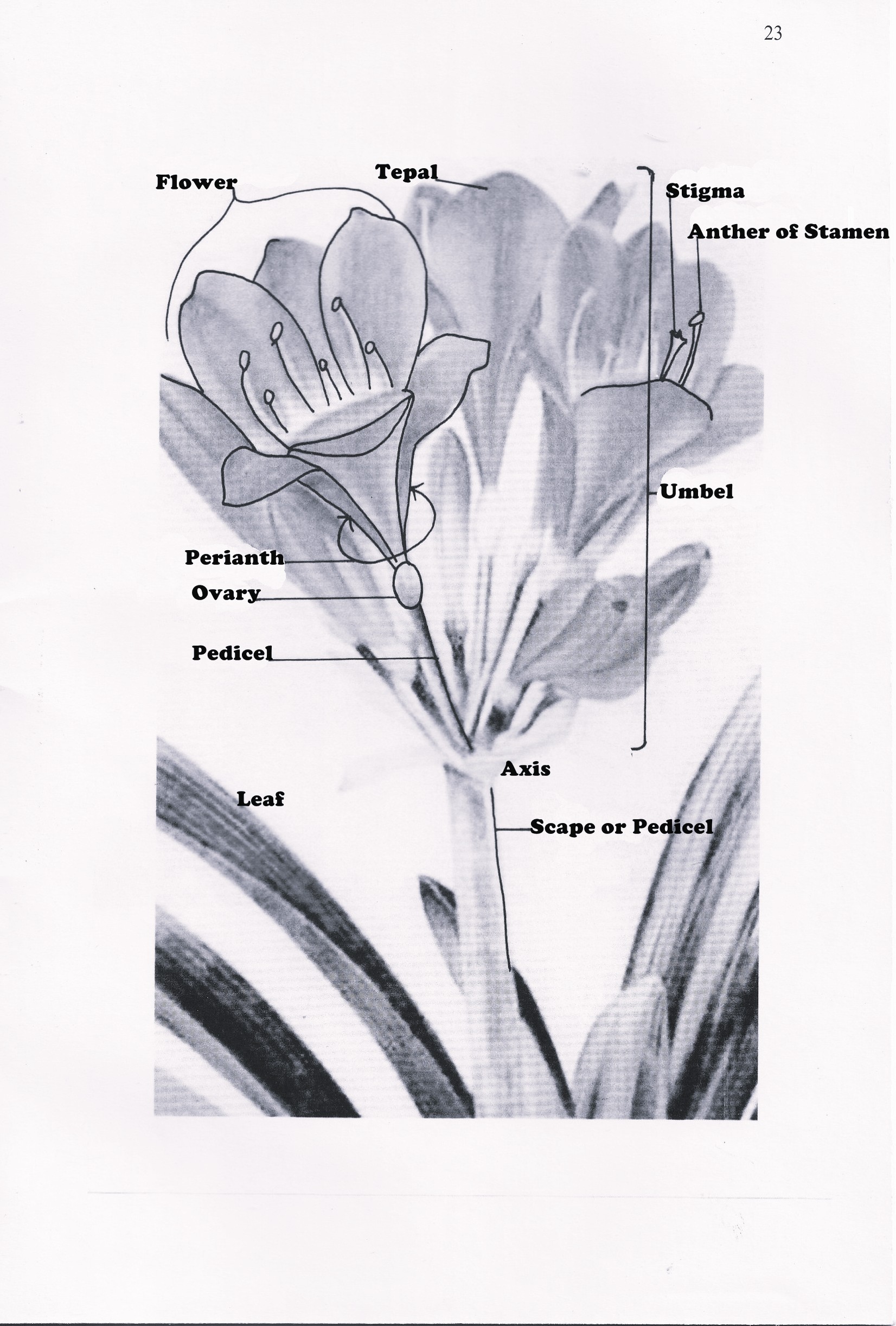
The whole Clivia head is called an inflorescence. This head or inflorescence is made up of numerous flowers – not florets. Each flower has six tepals. The inner whorl of three petals and the outer whorl of three sepals. Now both sepals and petals are called tepals!
In the middle of the open flower you will find one single stigma with a stigmatic lip of three tiny lobes. This part of the flower is the area that receives the pollen to become fertilized. Around the single central stigma are six stamens with a head of pollen known as the anther and the stalk known as the filament. (Six stamens around a single stigma)
To pollinate this flower, pollen from the anther must be placed on the stigmatic lips. Insects may do this, animals brushing past the flowering plant may do this and a strong breeze may dislodge some of the pollen and carry it to the stigmatic slips.
Natural pollinations as describe above does not always provide a high yield of seed. To increase the number of seeds produced, the anther or pollen may be physically picked and rubbed over the stigma. Early morning is a good time to pollinate. Touch the pollen with your finger and if the yellow colour of the pollen is seen on your finger you know the pollen is plentiful and mature. The stigma must not be dried out as it will then not be receptive to pollen.
Some of the Clivia plants are not receptive to their own pollen and may be infertile if self- pollinated. One pollination is all that is necessary, but many repeat the pollination twice a day for a day or two.
If a flower is successfully pollinated, the flower soon wilts and dries up. Soon after the flower drops, the base of the flower, at the end of the pedicel will how a green enlargement if successfully pollinated. These ‘beads’ will enlarge and hopefully after eight months the berry will colour-up to a bright red colour if from an orange flower. If the berry is soft to the touch, it is usually ready to be harvested.
Potting Soils
Garden planting
Planting your Clivia plant in the garden requires a semi-shaded position to avoid the the midday and vicious afternoon sunshine. The hot suns burns the leaves and flowers and ruins the appearance of the Clivia plants.
The Clivia plants prefer an well drained soil. Most soils are fine, however if you have clay soils, add compost or bark mix to improve the drainage of the soil
Pot planting.
A pot needs good drainage of the water. Commercial mixes are available for Clivia plants. Potting mixes usually need added bark material to improve drainage. Too much bark does not keep the plants upright and a stake may be necessary. Dont use too big a pot, rather start with a smaller pot and you may repot once the plant outgrows the pot. Some claim that the Clivia enjoys being rootbound, but perhaps the stress of too little water and nourishment forces the Clivia plant to flower? To me it makes sense to provide adequate soil for ideal growth of your Clivia.
Seedling soil
Commercial soils for seedlings are available – use a reputable brand or use fine bark based mixtures.
Seedling soils